
The Textile Industry in Northern France: From Roubaix to the Mass Market—Expertise That Has Gone Global
by Grégoire TERRIER (Director of Marketing & Collections – DUTEXDOR Group)
Auchan in Roubaix.
Castorama and Decathlon in Englos.
Kiabi in Roncq.
Boulanger in Lille.
Norauto is also in Englos.
A concentration so exceptional that it cannot be attributed to chance.
The North is one of the major birthplaces of the French retail industry. It is a region that has given rise to companies that have profoundly transformed the way we shop, dress, play sports, do home improvement projects, and equip ourselves.
But long before it learned how to sell to the masses, the North had already learned how to produce for the masses.
His first major field of activity was the textile industry.
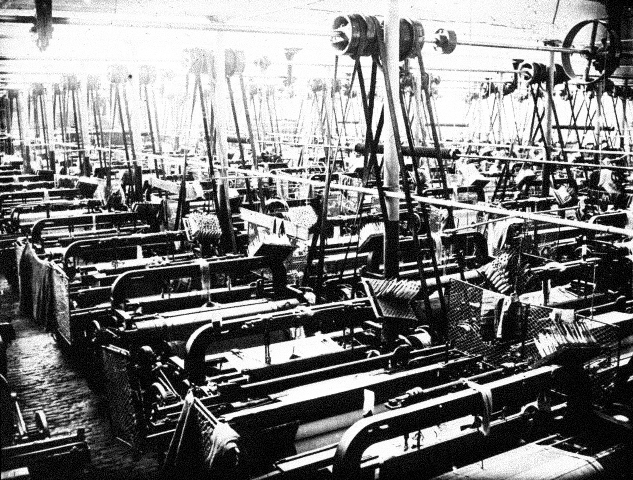
For more than a century, Roubaix, Tourcoing, and their surrounding areas were one of Europe’s leading textile-producing regions.
The DUTEXDOR Group was founded in 1991 in this region, bringing together these two traditions:the textile industry and the mass market.
Thirty-five years later, factories have changed, supply chains have become global, and the industry has undergone a profound transformation.
DNA, not so much.
Why did the North become one of the cradles of the French textile industry?
To understand the textile industry in northern France, you have to go back to Roubaix and Tourcoing.
Starting in the 19th century, both cities underwent dramatic industrialization, particularly in the wool industry.
Combing, spinning, weaving, dyeing, garment manufacturing, and trading: little by little, an entire ecosystem is taking shape.
At its peak, the textile industry accounted for up to 70 percent of the workforce in the Roubaix-Tourcoing area.
Large companies are emerging. Some factories employ several thousand people. Entire generations make their living, directly or indirectly, from the textile industry.
But it would be a mistake to reduce this story to just looms.
In addition to the factories, traders, logistics specialists, engineers, sales representatives, transportation companies, banks, machinery manufacturers, and auction houses are also emerging in the area.
The North is already developing what will later become part of its strength:
a comprehensive understanding of the product, the business, and the workflows.
Roubaix and Tourcoing: When the Textile Industry Also Invents New Ways to Sell
Another transformation is then in the works.
Some companies in the textile industry will no longer just focus on manufacturing. They will learn to sell in new ways.
La Redoute began as a textile mill in Roubaix before expanding into mail-order sales and then launching its famous catalog.
3 Suisses also traces its roots back to a textile company in the Lille metropolitan area before becoming one of the leading names in mail-order retail.
Damart was founded in Roubaix.
In other words, part of what would become modern French commerce has its roots directly in the regional textile industry.
The product is no longer enough.
You need to know how to present it, distribute it, manage inventory, understand consumers, and make your products accessible to an ever-wider customer base.
This shift from manufacturing to mass retail is essential to understanding what happens next.
From the Textile Industry to Mass Retail: Why Have So Many Retail Chains Emerged in the North?
A few decades later, the region became one of France's leading testing grounds for large-scale retail.
Auchan opened its first store in Roubaix in 1961.
Castorama launched its first large-scale home improvement store concept in Englos in 1969.
Norauto opened its first auto service center at that same location in 1970.
Decathlon opened its first store in Englos in 1976.
Kiabi was founded in Roncq in 1978 based on a simple yet, at the time, particularly disruptive idea: to offer affordable fashion for the whole family.
Boulanger began his career in Lille as early as 1954.
The categories no longer have much in common.
And yet, the reasoning is surprisingly similar.
Understand a need. Scale up a solution. Manage production volumes. Optimize workflows. Deliver the right balance of quality and value. And make the product accessible to as many people as possible.
These days, we’re happy to talk aboutthe mass market.
Up north, we've been making them for several generations.
The DUTEXDOR Group: A Textile Company Based in Northern France Since 1991
It was in this environment thatthe DUTEXDOR Group was foundedin 1991.
A French family-owned business based in the Nord region that has chosen to build its expertise around affordable textiles and major retail chains.
Socks, underwear, ready-to-wear, sportswear, lifestyle, private labels, brand licenses, and retailer brands: our business has evolved, but its core principles remain deeply rooted in this regional culture.
Understanding the product.
Understanding the consumer.
Understanding the brand.
And strike the right balance between desirability, quality, and affordability.
TWINDAY, our long-standing sock brand, was founded in 1993.
Then the categories expanded. The markets became European. Licensing took on an increasingly important role. The brands we work with became more and more prominent.
The Group is scaling up.
But we remain deeply convinced of one thing:
The mass market should never be the market for “inferior” products.
When a product is intended to be worn by hundreds of thousands of consumers, it actually deserves a great deal of attention.
A sock is still a textile product.
Boxer shorts should hold up through the wash.
A sweatshirt should keep its shape.
A print must be durable.
A color must remain stable.
The selling price never negates the product's requirements.
Is it a contradiction to be a French textile company without manufacturing in France?
That's a valid question.
And our response must be perfectly clear.
The DUTEXDOR Group is French. The DUTEXDOR Group is based in northern France. But our collections are not manufactured in France.
We have no desire to claim a “Made in France” label that isn’t ours.
Our commitment to the region must never become a marketing gimmick.
We are proud of our history, our presence in France, and our French culture.
However, our products are now manufactured by international industrial partners.
This reality does not erase our identity.
Rather, it tells the story of the profound transformation of an entire industry.
Why has part of France's textile production moved overseas?
The textile industry, which had been the driving force behind Roubaix and Tourcoing, has undergone several decades of restructuring.
International competition, changes in production costs, the gradual decline of certain industrial sectors, shifting consumer habits, and the globalization of supply chains have profoundly transformed the sector.
The Hauts-de-France region lost nearly 7,840 more jobs in the textile industry between 2008 and 2018, representing about 40 percent of its workforce during that period.
But it would be wrong to say thatthe textile industry in the North has disappeared.
He has changed.
Some companies continue to manufacture locally, particularly in technical, specialized, or high-value-added markets.
Schools, designers, garment makers, and manufacturers continue to preserve the region's traditional craftsmanship.
Other players have transformed their industries.
That's the case for us.
The DUTEXDOR Group has gradually specialized inproduct development, sourcing, industrial management, branding, licensing, and distribution.
We are therefore no longer a textile company in the industrial sense that the term might have had in Roubaix in 1900.
We are a 21st-century textile company.
Why does the DUTEXDOR Group manufacture internationally?
Because there is an industrial reality.
Producing several hundred thousand pairs of socks, undergarments, sweatshirts, or T-shirts requires production tools, capacity, raw materials, components, and highly specialized expertise.
Over the past few decades, major textile ecosystems have developed in Asia and other major producing regions.
Spinning mills, knitting mills, dyeing plants, garment manufacturers, accessory manufacturers, printing specialists, and logistics providers often operate there as part of integrated industrial chains.
For a company operating in the mass market, these capabilities are essential.
Manufacturing internationally therefore allows us to fulfill the promise we have historically made:
develop attractive, high-quality products at prices that are affordable to as many people as possible.
But producing far away doesn't mean buying from just anywhere.
And certainly not haphazardly.
International Production: How Can We Ensure Quality?
The quality of a textile product is not determined solely by the country in which it is manufactured.
It begins long before production.
As specified in the specifications.
The choice of materials.
Construction.
Paper weight.
The sons.
The components.
Dimensions.
The colors.
The tests.
Tolerances.
Requirements for strength and wash resistance.
A poor set of specifications will remain a poor set of specifications whether it's 50 kilometers from Lille or several thousand kilometers away.
Conversely, a product that has been carefully developed, entrusted to a competent industrial partner, and properly monitored can meet high standards, regardless of its geographic location.
That is why the DUTEXDOR Group does not operate simply as an intermediary that purchases an existing product remotely.
Our teams develop products and oversee their production.
Our sourcing organization in Asia also allows us to work closely with our manufacturing partners and to monitor development, production, quality control, and deadlines.
Producing from a distance should never mean managing from a distance.
Manufacturing outside of France does not exempt companies from social requirements either
The same principle applies to the conditions under which our products are manufactured.
The country of origin alone is not enough to determine whether a product is produced responsibly or not.
What matters are the requirements imposed, the inspections conducted, the certifications required, traceability, and the ability to hold a partner accountable—or even to terminate the relationship—if that partner fails to meet the expected standards.
The DUTEXDOR Group is committed, in particular, to auditing its industrial partners and raising its social and environmental standards.
In particular, 100% of our suppliers were audited in 2024.
Our approach is also based on standards and certifications such as Amfori and OEKO-TEX Standard 100.
These measures do not mean that everything is perfect.
No reputable global textile chain should make such a claim.
On the other hand, they make it possible tomeasure, monitor, and improve.
And that is probably where the responsibility of a company like ours lies.
Not in simplistic statements.
In the specific requirements.
From "Made in France" to French craftsmanship
So, what makes a piece of clothing “French” if it isn’t made in France?
A lot of things.
Brand Strategy.
Market knowledge.
The Collections.
Artistic Direction.
Design.
Material Selection.
Product development.
Building product assortments.
Sourcing.
Specifications.
Quality Management.
Licensing.
Business Strategy.
Relationships with major retailers.
And above all, the decisions.
The expertise of a modern textile company is no longer limited to the location of its sewing machine.
It also lies in its ability to organize an entire international value chain and remain accountable for it.
That is exactly what our profession has become.
What Remains Deeply Northern About the DUTEXDOR Group
Our headquarters, of course.
Our History.
But above all, a certain way of thinking about business.
We come from a region that has long believed that a good product should not be reserved for just a few.
A region that has given rise to some of France's most powerful retail chains by building their success on scale, logistics, operational efficiency, and value for money.
A region that knows that an affordable price leaves no room for inefficiency.
When you need to sell a lot without compromising quality, every detail counts.
We grew up with this culture.
It probably explains part of what the DUTEXDOR Group is today.
The textile industry in the North hasn't disappeared. It has simply taken on a new form.
The smokestacks of Roubaix and Tourcoing still tell the story of the industry that brought wealth and shaped the identity of the region.
Of course, most of them no longer produce as much as they used to.
But behind this transformation lies something far more difficult to move than a machine.
A culture.
The textile industry.
About the product.
Trading.
On Entrepreneurship.
Business.
Volumes.
Logistics.
And accessibility.
The DUTEXDOR Group is part of this new generation of textile companies in northern France that have not clung to the industrial model of the past, but have transformed that legacy to adapt to a global economy.
We are French.
We're from the North.
We manufacture internationally.
And we do not consider any of these three statements to be contradictory.
Because staying true to a story doesn't mean trying to freeze it in time.
Sometimes that means knowing how to adapt it.
The North taught us how to make textiles.
Then he taught us how to sell it to as many people as possible.
More than thirty-five years after the DUTEXDOR Group was founded, we are still doing exactly that.
Frequently Asked Questions About the Textile Industry in the North and the DUTEXDOR Group
Why is Roubaix known for textiles?
Starting in the 19th century, Roubaix, along with Tourcoing, became one of Europe’s leading centers of the textile industry, particularly in the wool sector. Spinning mills, combing mills, weaving mills, dyehouses, and trading activities formed a particularly dense industrial ecosystem at that time.
Is there still a textile industry in the North?
Yes. While the regional textile industry has shrunk considerably from its heyday, it has not disappeared. Specialized manufacturers, garment makers, designers, schools, and textile companies continue to operate in the Hauts-de-France region. However, the sector has undergone a profound transformation and has become increasingly international.
Is the DUTEXDOR Group a French textile company?
Yes. Founded in 1991, the DUTEXDOR Group is a family-owned French textile group based in the Nord region. It primarily develops socks, underwear, lifestyle apparel, and sportswear—both under its own brands, under license, and for private labels.
Are DUTEXDOR Group products manufactured in France?
No. The DUTEXDOR Group is a French company, but its collections are manufactured by specialized international industrial partners. Product development, sourcing, quality control, branding, licensing, sales, and distribution are managed by the DUTEXDOR Group and its teams.
Why doesn't the DUTEXDOR Group manufacture its products in France?
The DUTEXDOR Group primarily operates in high-volume markets that require significant industrial capacity and prices compatible with the mass market. Today’s international textile ecosystems make it possible to meet these requirements while adhering to the specifications defined by the Group.
How does the DUTEXDOR Group oversee its international textile production?
The DUTEXDOR Group defines its specifications, selects its industrial partners, monitors development and production, and conducts quality controls. It also relies on a local sourcing network in Asia, as well as on audits and social and environmental standards.
What does "mass-market textiles" mean?
Mass-market textiles refer to products developed to be accessible to a large number of consumers and distributed on a large scale. This requires a particularly high level of expertise in product development, production volumes, sourcing, logistics, and value for money.