
Does the apparel industry still have a future in mass retail? Why mass-market retail apparel sections are reinventing themselves, not disappearing
By Jean-Marc TERRIER (President and CEO – DUTEXDOR Group)
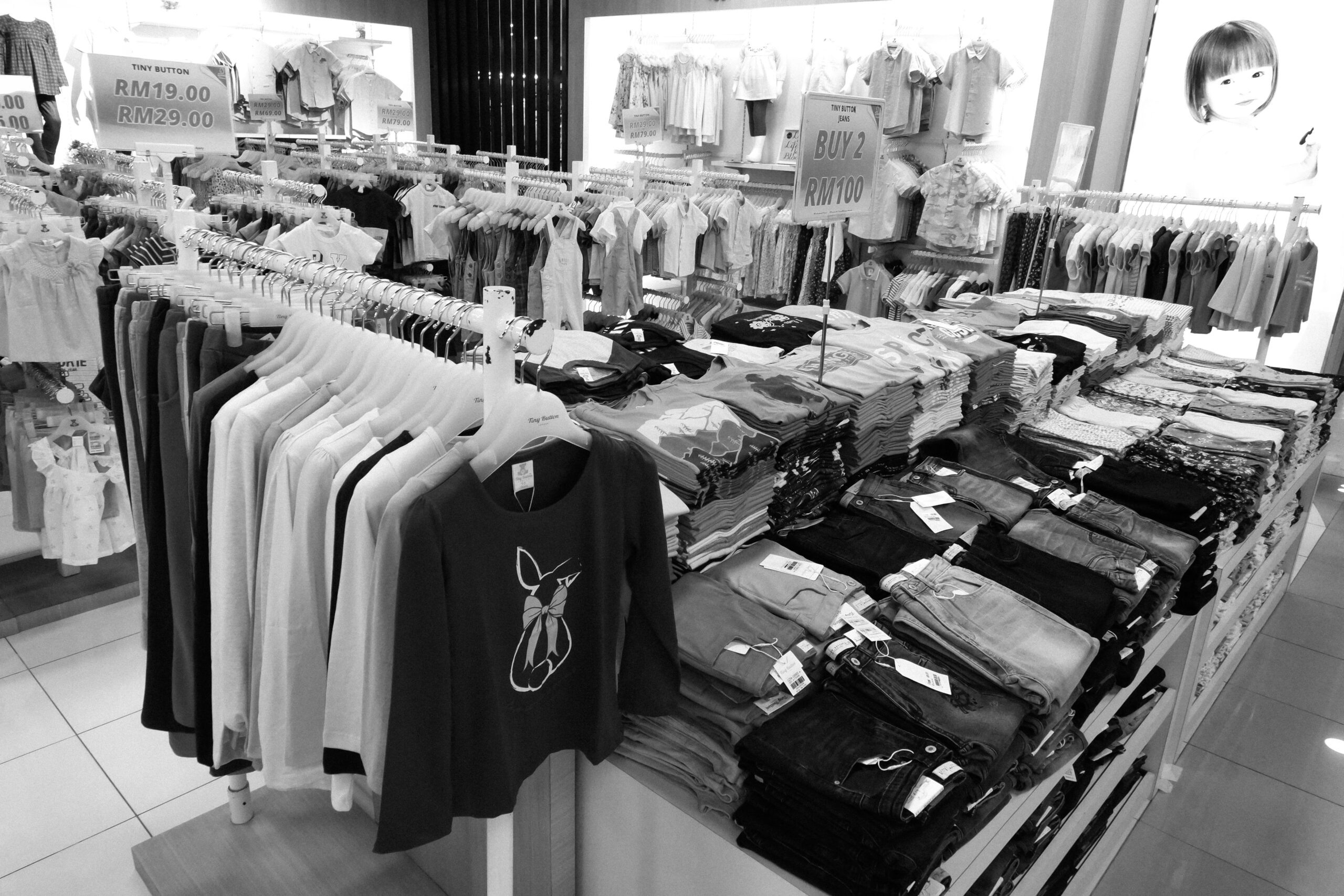
For several years now, the same idea has come up regularly in conversations about retail: hypermarkets have lost their appeal, the non-food sector is doomed, and clothing departments are no longer expected to play a major role in large grocery stores.
At first glance, the figures seem to support this analysis. Shopping behaviors are changing, online retail continues to grow, specialty retailers are capturing a share of household spending, and retailers are gradually revamping the layout of their stores. The hypermarket model of the 1990s—capable of selling everything from yogurt to a television, a lawn mower, or a complete wardrobe for the whole family—is now a thing of the past.
That said, does this mean that themass-market apparelindustry is doomed?
We don't think so. Quite the opposite, in fact.
Because behind the changes inthe non-food sector in supermarkets, a much deeper phenomenon is at work: the apparel sector isn’t disappearing—it’s changing its role. And this shift could very well make it one of the most strategic departments in the coming years.
The business model of hypermarkets is entering a new phase
For several decades, hypermarkets have built their success on a simple principle: attracting customers with food products and generating a significant portion of their profitability through non-food departments.
Today, that balance is being seriously challenged.
Inflation has changed households’ spending priorities. E-commerce has become the dominant channel for product categories such as electronics and small household appliances. Specialty retailers have strengthened their positions in DIY, sports, home decor, and beauty. At the same time, consumers are expecting more services, convenience, and shopping experiences.
In response to these changes, major retailers are adapting their business models. Some stores are being downsized, while new spaces are being dedicated to services, food service, specialty sections, and even secondhand goods. Non-food merchandise isn’t disappearing; it’s becoming more selective, better aligned with consumer expectations, and more of a source of value.
This transformation naturally affects the textile industry.
Textiles remain one of the few non-food departments to generate steady foot traffic
Unlike other categories, clothing meets a recurring need.
We don't just update our wardrobes to keep up with trends. We buy clothes because children grow, because a pair of socks wears out, because we need an extra T-shirt for vacation, or because we need a new gym outfit.
This practical aspect makes all the difference.
According to Refashion,3.6 billion items of clothing, footwear, and home textiles were brought to market in France in 2025, representing a1.5% increasecompared to 2024. Behind this figure lies an often-overlooked reality: despite the sector’s challenges, the French continue to buy textile products in large quantities.
This consumption isn't going away.
She is changing.
It is becoming more thoughtful and more mindful of value for money, but it remains deeply rooted in the daily lives of households.
That is precisely what makes the textile section a unique one within large grocery stores.
Retailers aren't turning their backs on the apparel industry. They're just investing in it differently.
If there really were a strategy to phase out textiles in large-scale retail, the investments made over the past two years would be difficult to explain.
On the contrary, major retailers are strengthening their commitments to this category.
TheE.Leclerc Group, France’s leading textile retailer by volume, has chosen to make itsTissaia,Mots d’Enfants, andEco+brands the showcases for its environmental strategy. Starting in 2026, more than4,000 productswill feature a Textile Eco-Score, allowing consumers to access detailed information about their environmental impact and traceability.
Carrefour is following a similar path. The retailer is testing environmental labeling on itsTEX brand, with the goal of gradually rolling out this initiative across all of its collections. This effort is part of a broader strategy aimed at developing sustainable materials, improving product traceability, and guiding consumers toward more responsible fashion.
These initiatives reflect a major shift.
Textiles are no longer viewed solely as a loss leader intended to drive traffic.
It becomes a tool for building brand image, standing out from the competition, and fostering customer loyalty.
The future of the apparel department will no longer depend on quantity, but on its relevance
It would be a mistake to envision the future of the apparel industry using the standards of the past.
Consumers no longer expect dozens of additional linear meters or thousands of product SKUs.
They are looking for more accessible collections, better-designed products, recognizable brands, and prices that are in line with their purchasing power.
This development is fundamentally changing the way we put together an offer.
Product assortments are becoming more targeted.
Faster turnarounds.
More cohesive collections.
Brands are becoming increasingly important.
In other words, apparel is gradually evolving from a simple product category into a key differentiator among retailers.
This transformation opens up new opportunities for suppliers capable of offering much more than just a product catalog.
Brands are once again taking center stage in retailers' strategies
In a world where choice is abundant, the brand once again becomes a point of reference.
It reassures consumers.
She narrows down her choices.
It conveys a promise of quality and style.
That is why retailers are simultaneously developing their own brands while seeking out licenses or brands that can enhance the appeal of their store aisles.
This strategy also responds to a sociological shift.
Consumers want to continue managing their budgets, but they no longer accept constant compromises on quality or design. They are looking for affordable fashion that remains desirable.
This requirement explains why the collections sold in supermarkets are now much more sophisticated than they were about ten years ago.
Price remains a key factor.
But he's no longer the only one.
The challenge in the coming years will be to balance accessibility, quality, and accountability
The real challenge facing the textile industry in mass retail probably no longer lies in volume.
It lies in its ability to simultaneously meet three expectations that had long seemed incompatible: offering affordable products, improving their quality, and incorporating increasingly stringent environmental requirements.
The implementation of environmental labeling for textiles perfectly illustrates this trend. Starting in October 2025, companies will be able to report a standardized environmental cost, calculated using the French Ecobalyse methodology, marking a new milestone in the sector’s transparency.
For distributors and their industrial partners alike, this development presents both a challenge and an opportunity.
It is driving the entire industry to rethink products, materials, industrial processes, and supply chains.
The textile industry is thus becoming a testing ground for transformation in the non-food sector.
The textile industry in the GSA is not a relic of the past. It is a key issue for the future.
It would probably be jumping the gun to say that textiles are disappearing from large grocery stores.
What is gradually disappearing is a certain way of approaching the clothing department: an approach based almost exclusively on volume, ongoing sales, and the accumulation of product SKUs.
Conversely, all signs point to retailers wanting to develop offerings that are more cohesive, higher in quality, and more distinctive.
For theDUTEXDOR Group, which has been working with the leading players in the mass retail sector for more than thirty years, this trend confirms a long-held belief: textiles still have an important place in mass retail, provided they offer genuine added value.
The future of the apparel department will likely not be shaped by an increase in square meters.
It will be shaped by greater expertise, stronger brands, higher product quality, and an ever-deeper understanding of consumer expectations.
Because, ultimately, the question is no longer whether the French will continue to buy their clothes at big-box retailers.
The real question is which retailers will be able to offer them the right collections, at the right price, at the right time.
And that is undoubtedly where the future of textiles in the supermarket sector will be decided.