
French Fashion: Is Moving Upmarket Really the Solution for Revitalizing a Ready-to-Wear Brand?
by Grégoire TERRIER (Director of Marketing & Communications – DUTEXDOR Group)
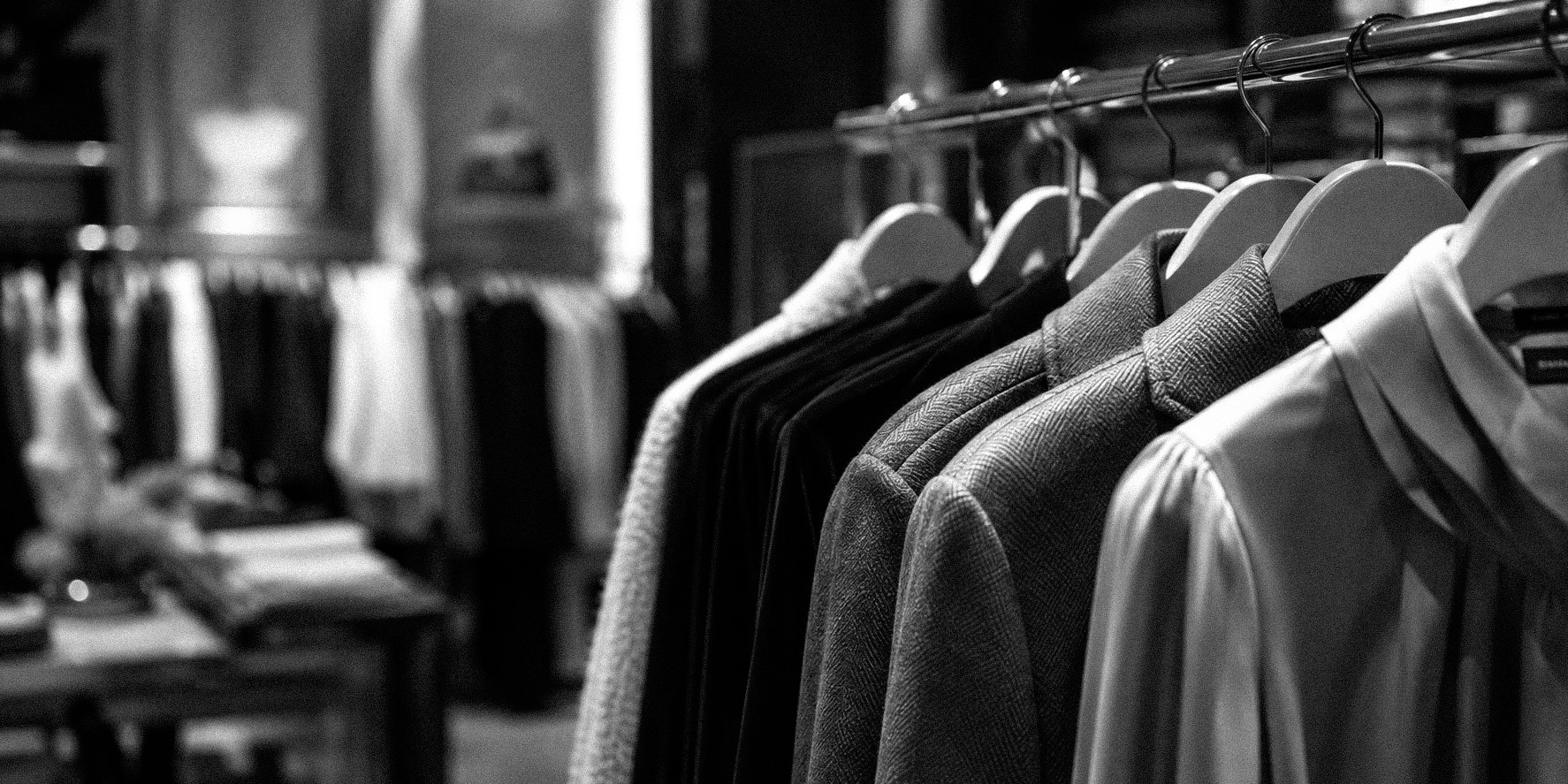
Faced with challenges in the French apparel market, the temptation is strong for some long-established brands to seek salvation in the premium segment. Repositioning, price increases, a new identity, and more selective distribution: moving upmarket sometimes seems like the obvious response to the erosion of the mid-market. However, in an industry where consumers are increasingly careful about their spending and where perceived value has become a decisive factor, becoming more expensive does not necessarily mean becoming more desirable. What if the right strategy were instead to decouple desirability from volume?
The French mid-range market is looking for a new model
It’s hard to ignore the facts. TheFrench apparel markethas been undergoing a profound restructuring for several years. In 2025, it was worth 34.7 billion euros, down 1.3% year-over-year. Even more significant: in the first half of 2025, spending on apparel and textiles remained nearly 10% below its 2019 level. Behind this relative annual stability, therefore, lies a structural transformation of the market.
The successive difficulties faced by Camaïeu, Kookaï, Kaporal, Naf Naf, Jennyfer, and more recently Comptoir des Cotonniers, Princesse tam.tam, and IKKS have brought this crisis into sharp relief. The causes are obviously numerous: inflation, rising operating costs, a retail network that is sometimes oversized, the explosion of online retail, the secondhand market, international competition, and the spectacular growth of ultra-fast fashion platforms. By 2025, the number of stores operated by the retailers tracked by the Alliance du Commerce was nearly 20% lower than in 2019.
In response to this situation, one solution comes up time and again:moving upmarket.
The idea seems logical. Since the price war against international players seems impossible to win, we might as well aim for higher margins, work on our brand image, streamline distribution, and target consumers who are willing to pay more.
On paper, the equation looks appealing. In reality, it is much more complex.
Raising prices isn't enough to become a premium brand
This is probably the biggest misconception surrounding themove toward higher-end fashion in ready-to-wear. "Premium" isn't a pricing tier. It's a perception.
Changing a logo, revamping a store concept, improving marketing campaigns, or raising prices can all be part of a repositioning strategy. But none of these elements alone is enough to transform a consumer’s relationship with a brand.
Sézane currently offers an interesting example of this approach. In 2026, after several years of planning, the French brand unveiled a major overhaul of its brand identity: a new logo, a new visual direction, and updates to its stores, packaging, and collections—including the announced opening of a new location at 117 rue du Bac in Paris. But Morgane Sézalory herself emphasizes the desire to preserve the core values that built Sézane. So it’s not simply a matter of becoming more expensive; it’s about evolving the brand’s image without losing its long-standing community.
That's where the difficulty begins.
A brand can set its own price. It never determines its perceived value on its own.
And consumers in 2026 seem, in fact, less willing to accept a price increase that is not accompanied by a tangible improvement in the product, service, or experience.
Even the luxury sector has experienced this. According to McKinsey,more than 80% of growth in the luxury sector between 2019 and 2023 came from price increases, rather than volume growth. This strategy eventually reached its limits: aspirational consumers drifted away, and customers began to question the relationship between price, quality, creativity, and experience more closely.
If even the world’s largest fashion houses are facing this challenge, a French ready-to-wear brand that has historically been positioned in the mid-range segment must obviously take it into account.
Today, French consumers look for value before they look for premium products
The consumption figures make this equation even more complicated.
In 2025,3.6 billion new items of clothing, shoes, and home textileswere sold in France. On average, each French person bought 43 new items of clothing that year. However,seven out of ten purchases were of entry-level products, with an average price of around 8.30 euros.
At the same time, secondhand clothing accounted for 11.8% of clothing spending in the first half of 2025 and as much as 17.5% among 18- to 34-year-olds. In terms of volume, Vinted, Kiabi, and Amazon were the top three brands among French consumers at that time.
Of course, these figures do not mean that the French no longer want prestigious brands. They reveal something else:attitudes toward value have become more critical.
Consumers may be willing to pay more. But they want to understand why.
A more beautiful fabric. A better-constructed cut. A higher weight. A lining. Embroidery. A distinctive finish. Greater durability. Impeccable service. A unique experience.
So the move upmarket has much less to do with marketing than people think. It starts with the product.
True premium quality is in the details
This is a belief we share atthe DUTEXDOR Group: when a brand wants to elevate its image, the initial investment must be visible—but above all, it must be felt in the product.
Consumers don't necessarily know the cost of a fabric, the density of embroidery, or the complexity of the construction. However, they immediately notice the difference when they hold the product in their hands.
That's when the price starts to seem reasonable.
Premium quality, therefore, isn’t necessarily about being spectacular. It is built on a combination of consistent details: materials, cut, feel, finishes, accessories, packaging, merchandising, service, and, above all, respect for the brand’s identity.
This concept of identity is fundamental. A long-established brand cannot erase twenty or thirty years of consumer perception with a new advertising campaign. Its heritage is, in fact, one of its main assets.
So the question shouldn't be:How can we turn this brand into a premium brand?
But rather:How can one increase one's appeal without undermining the very foundations of one's reputation?
That subtle difference profoundly changes the strategy.
Do we really have to choose between volume and desirability?
This is where we at the DUTEXDOR Group advocate a different approach.
A brand is not necessarily required to focus all of its ambitions on a single collection, a single distribution network, and a single price point.
It is perfectly capable of developing a more upscale, creative, and selective offering designed to enhance its appeal, while at the same time maintaining a strong presence among the general public.
Provided thatthe territories are clearly separated.
That is precisely what a well-designedtextile licensing strategycan achieve.
The licensee should therefore not attempt to replicate the brand’s main collection at a lower cost. That would likely be the worst possible approach. Instead, the licensee must develop a line specifically designed for its distribution network, with its own products, its own economic constraints, and its own collection structure, while strictly adhering to the design codes that make the brand recognizable.
The difference is crucial.
A textile license can help separate desirability from volume
For a French brand looking to move upmarket, this organizational structure can serve as a particularly interesting model.
On the one hand, the brand is focusing its direct investments on its repositioning: design, branding, stores, communications, collaborations, customer experience, and collections with higher added value. The purpose of this initiative is to rebuild or enhance thebrand’s desirability.
On the other hand, a licensed partner with expertise inmass-market textilescan continue to grow the brand’s volume, reach, and visibility among a much broader audience.
The two strategies are not contradictory. On the contrary, they can reinforce each other.
The market itself underscores the importance of maintaining this accessibility. In 2025, seven out of ten purchases of new textiles in France were still in the entry-level segment. In an industry where consumers place such a high value on value for money, deliberately abandoning the accessible market to focus exclusively on a premium clientele amounts to giving up a significant portion of potential sales volume.
A brand licensethus ensures that the same offering is not required to fulfill two incompatible roles.
The mass-market line must not, under any circumstances, become a watered-down version of the brand
This strategy, however, comes with one absolute condition: mass-market distribution must be managed with just as much precision as the move upmarket itself.
Being accessible doesn't mean being sloppy.
At theDUTEXDOR Group, we believe that a licensing agreement begins with an understanding of the brand: its history, its consumers, its visual identity, its iconic products, its positioning, and—sometimes even more importantly—what it must never become.
Collections intended forlarge-scale retailers and mass-market channelsmust then be developed specifically for those channels. It’s not a matter of taking a premium collection and gradually stripping away details until the right price is reached. You have to start with the consumer, the channel, and the product to build a different but coherent offering.
It is precisely this differentiation that helps protect the brand's image.
A material can be different without seeming cheap. A product can be more affordable while still featuring high-quality finishes. A collection can be designed for high volume without losing the stylistic elements that make the brand recognizable.
The mass market is therefore not necessarily the enemy of moving upmarket.If mishandled, it can indeed dilute a brand. If well-executed, however, it can finance, promote, and reinforce the brand’s desirability.
Moving upmarket may no longer be a destination, but rather a branch of the brand
The paradox of the current market is actually quite interesting.
While many brands are seeking to move upmarket, international analyses show thatby 2026 themid-market has once again become the fastest-growing segment and has now replaced luxury as the primary driver of value in the fashion industry, according to McKinsey. Consumers continue to seek out brands, but are increasingly weighing price, quality, and a product’s true value.
Wanting to become a premium service at any cost could therefore be a response to a question that the market no longer asks in exactly those terms.
Perhaps the real opportunity lies in building brands that can intelligently occupy multiple territories.
A premium look to create desirability.
A more selective casting process to enhance the film's image.
At the same time, specific collections that are accessible to as many people as possible to maintain brand awareness, drive sales, and foster a relationship with consumers.
It is this synergy that we champion at theDUTEXDOR Group.
For more than thirty years, our work has centered on understanding how a brand can reach the mass market without losing its identity. This requires expertise in sourcing, product development, pricing, and the constraints of mass retail—but above all, it requires a firm belief:an accessible brand is not necessarily a run-of-the-mill brand.
For some French brands that are currently seeking a new lease on life, the future may not lie in choosing between volume and premium.
It might lie in the ability to do both effectively.
And to let each part of the brand play its true role.